February Birthstone Amethyst Guide
What is the February birthstone?
The February birthstone is Amethyst, a captivating purple gemstone long associated with peace, protection and clarity. Known for its rich violet tones and timeless appeal, Amethyst has been treasured for centuries. In Ancient Greece, it was believed to protect the wearer from intoxication and promote a clear mind. During the Middle Ages, Amethyst was considered as valuable as diamonds and was worn by royalty as a symbol of power and refinement.
Today, February birthstone jewellery remains a meaningful way to celebrate February birthdays, personal milestones and anniversaries.
What colour is the birthstone for February?
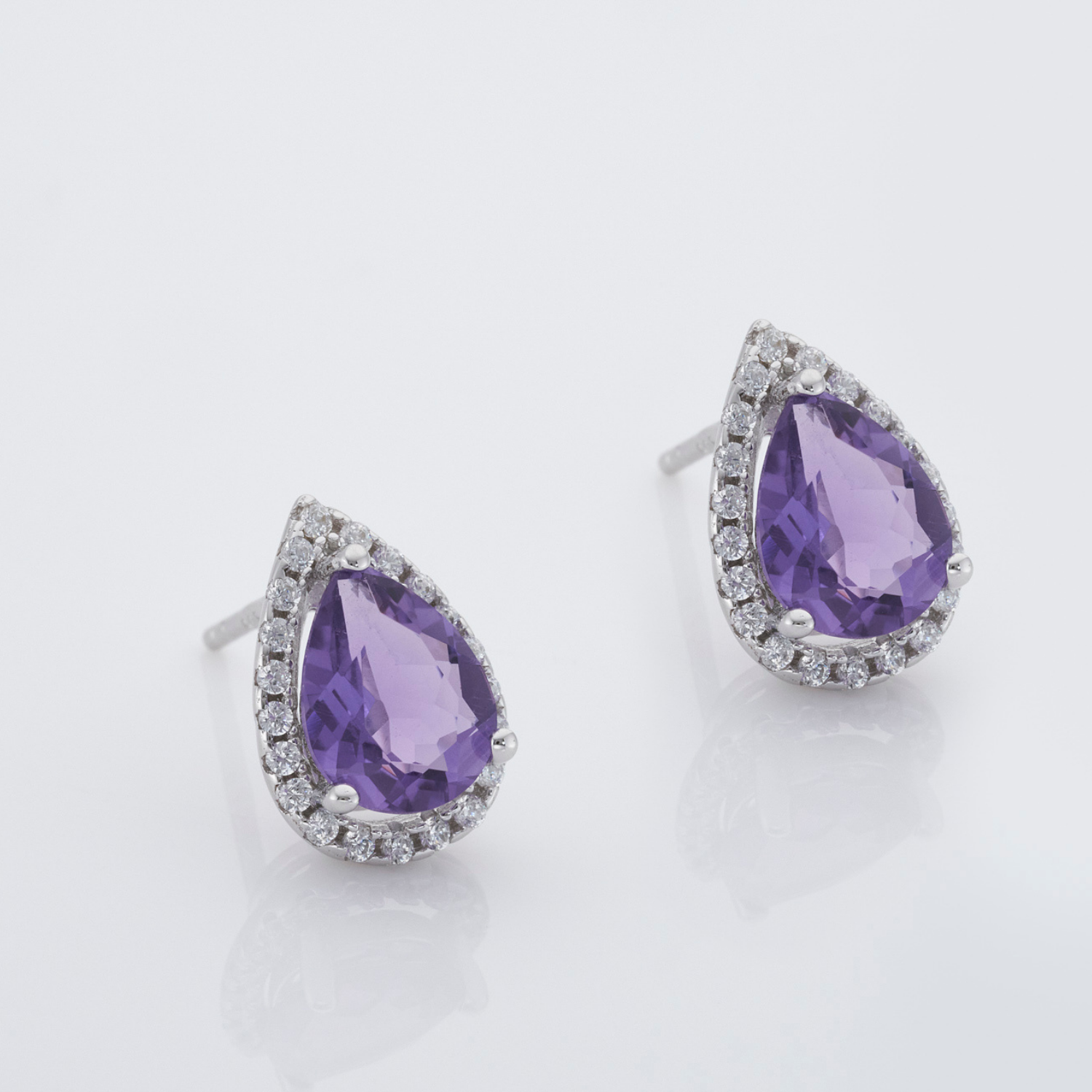
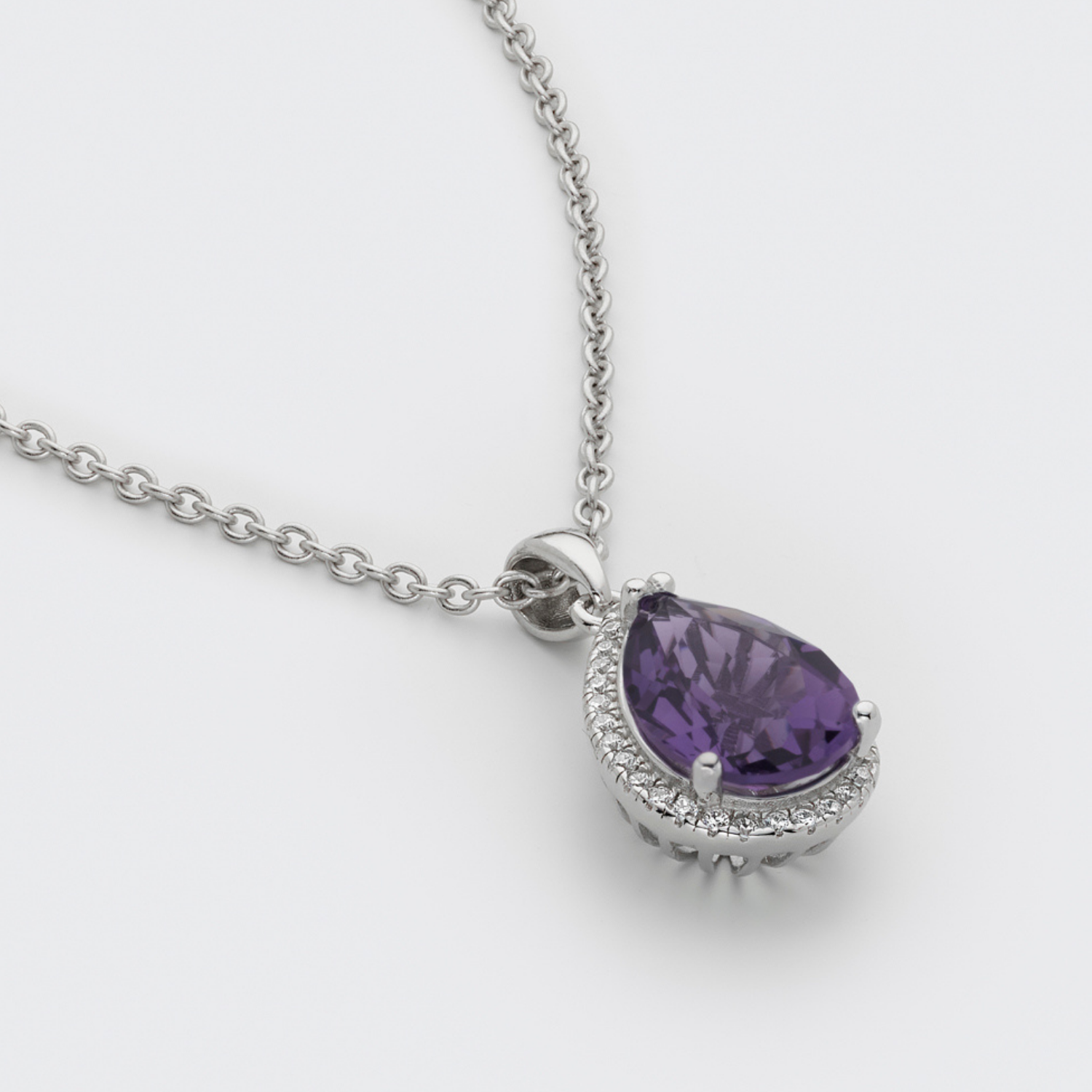
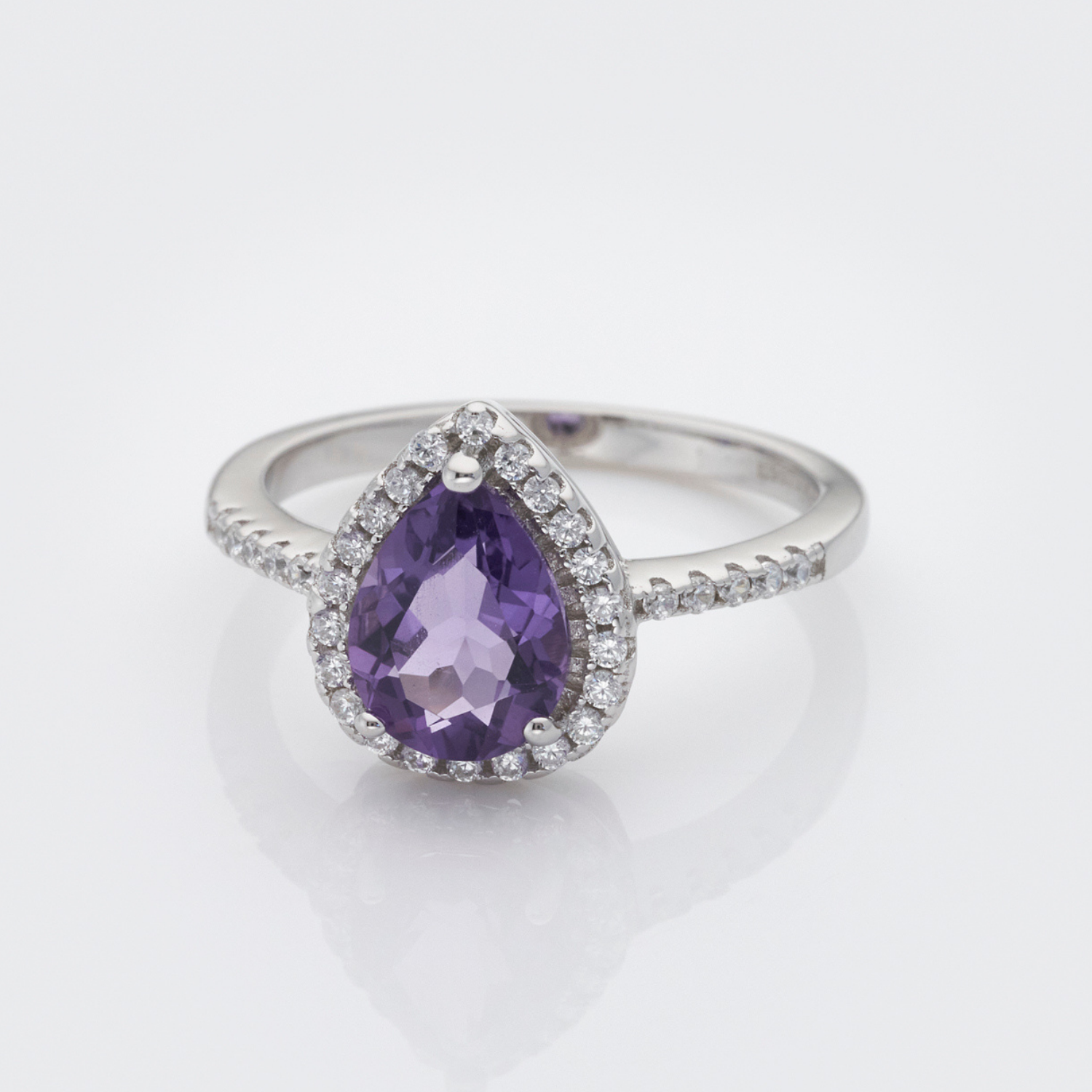
The February birthstone colour ranges beautifully from delicate lilac to deep royal purple. This variation occurs naturally within the Quartz family, meaning every Amethyst stone is unique.
Lighter lavender tones offer a soft, romantic feel, while deeper violet hues create a more dramatic, luxurious statement. Whether set in gold or sterling silver, the purple shades of Amethyst jewellery bring depth, elegance and individuality to every piece.
What is the meaning of Amethyst birthstone?
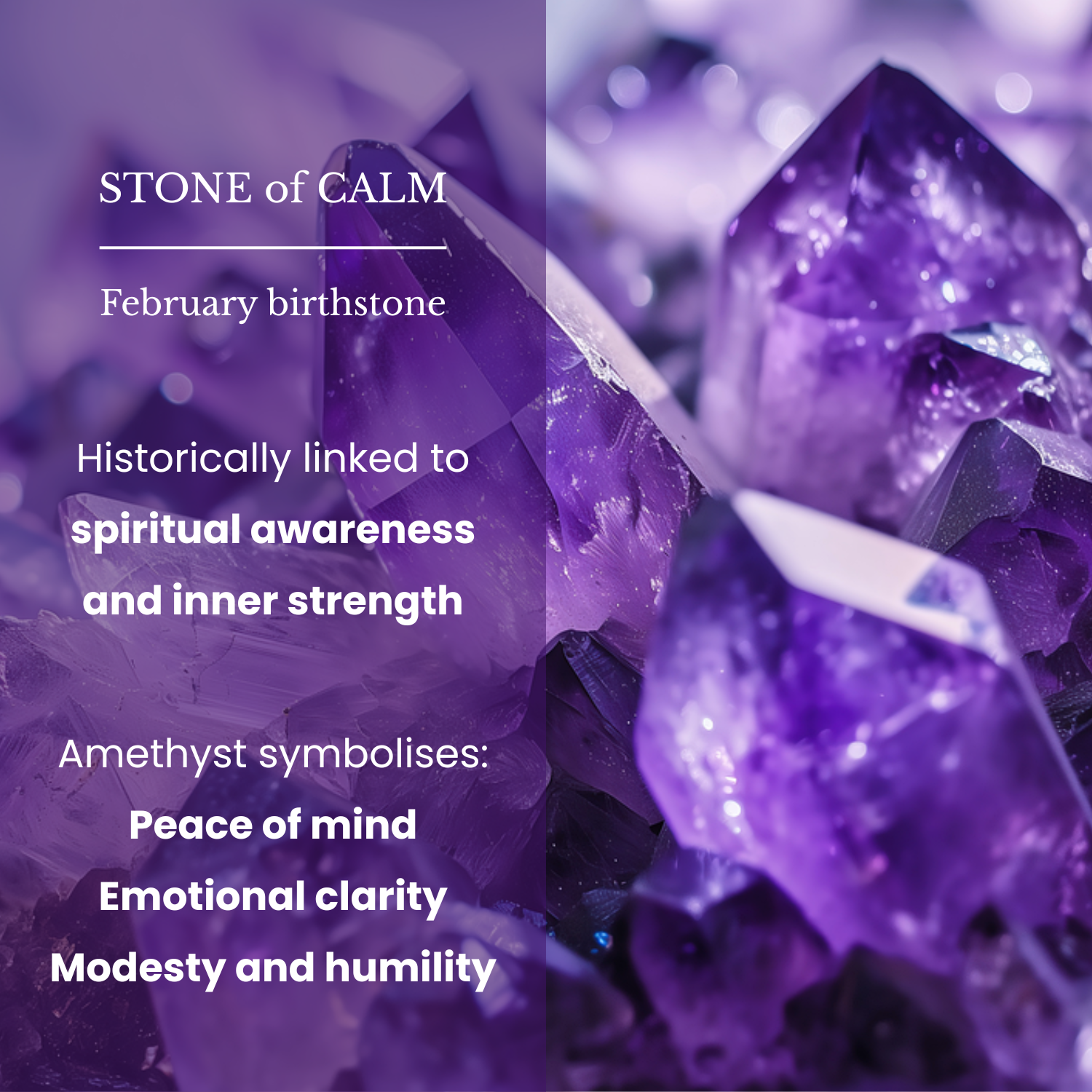
The meaning of Amethyst is rooted in calm, clarity and protection. Often described as a stone of balance, it is believed to help quiet the mind, reduce stress and encourage emotional stability.
Historically linked to spiritual awareness and inner strength, Amethyst is thought to symbolise:
- Peace of mind
- Emotional clarity
- Protection and grounding
- Modesty and humility
For many, wearing Amethyst birthstone jewellery is not only about colour, but about carrying intention and meaning throughout the day.
Where is Amethyst found?
Amethyst is mined across several continents, including South America, Africa and parts of Europe. The gemstone forms within volcanic rock cavities, where mineral-rich solutions crystallise over time.
Depending on its origin, the tone and saturation of the purple can vary - contributing to the distinctive character of every piece of natural Amethyst jewellery.
Amethyst Birthstone jewellery
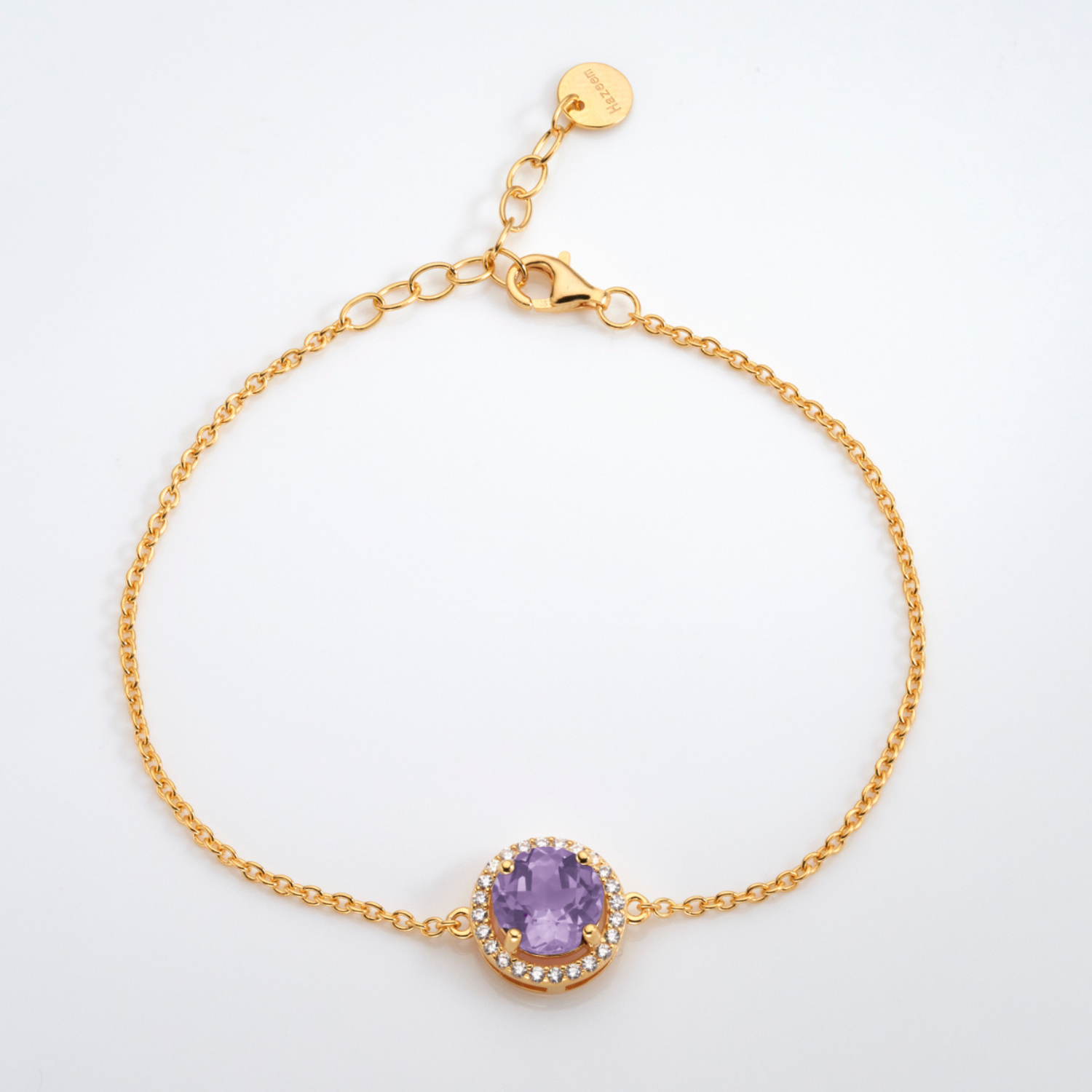
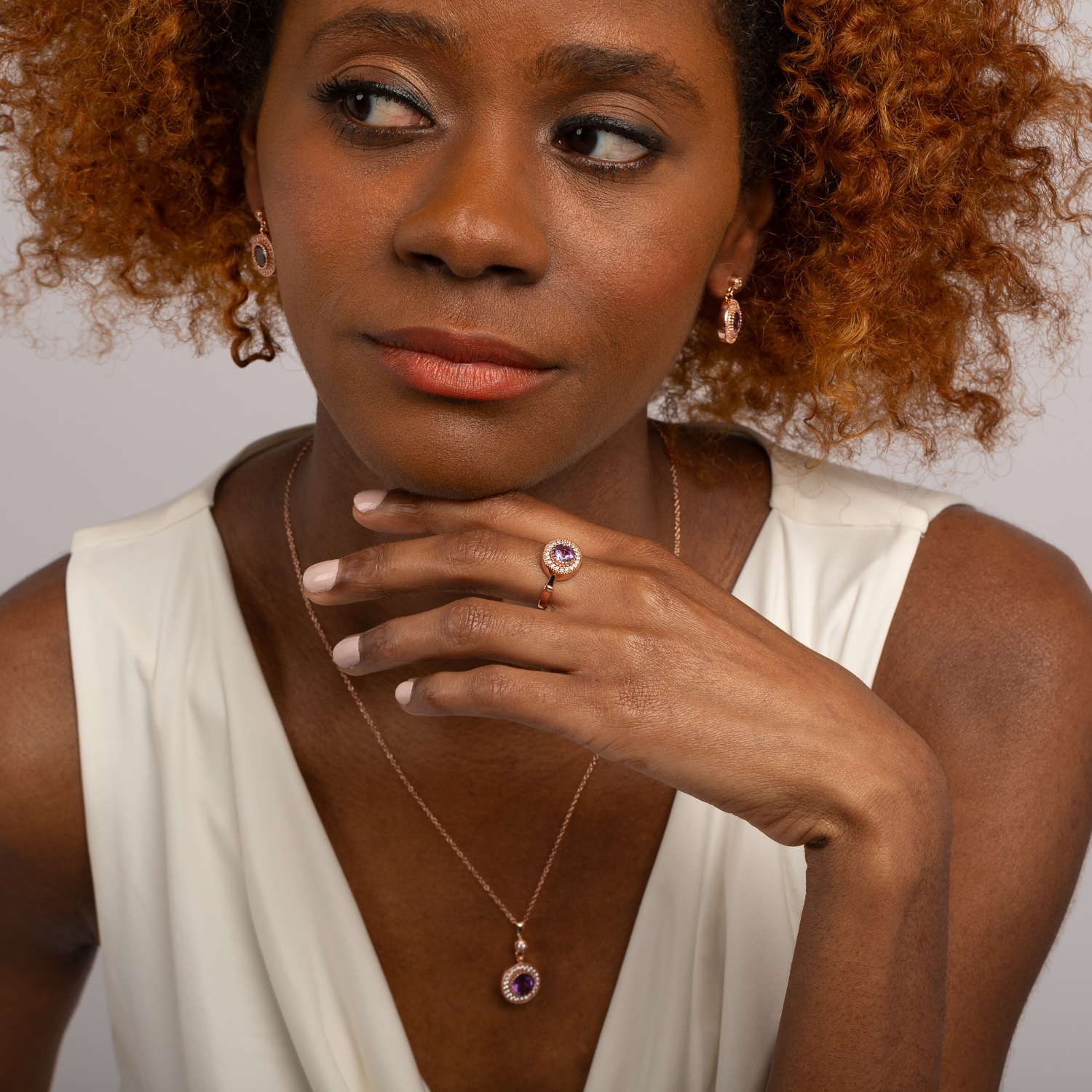
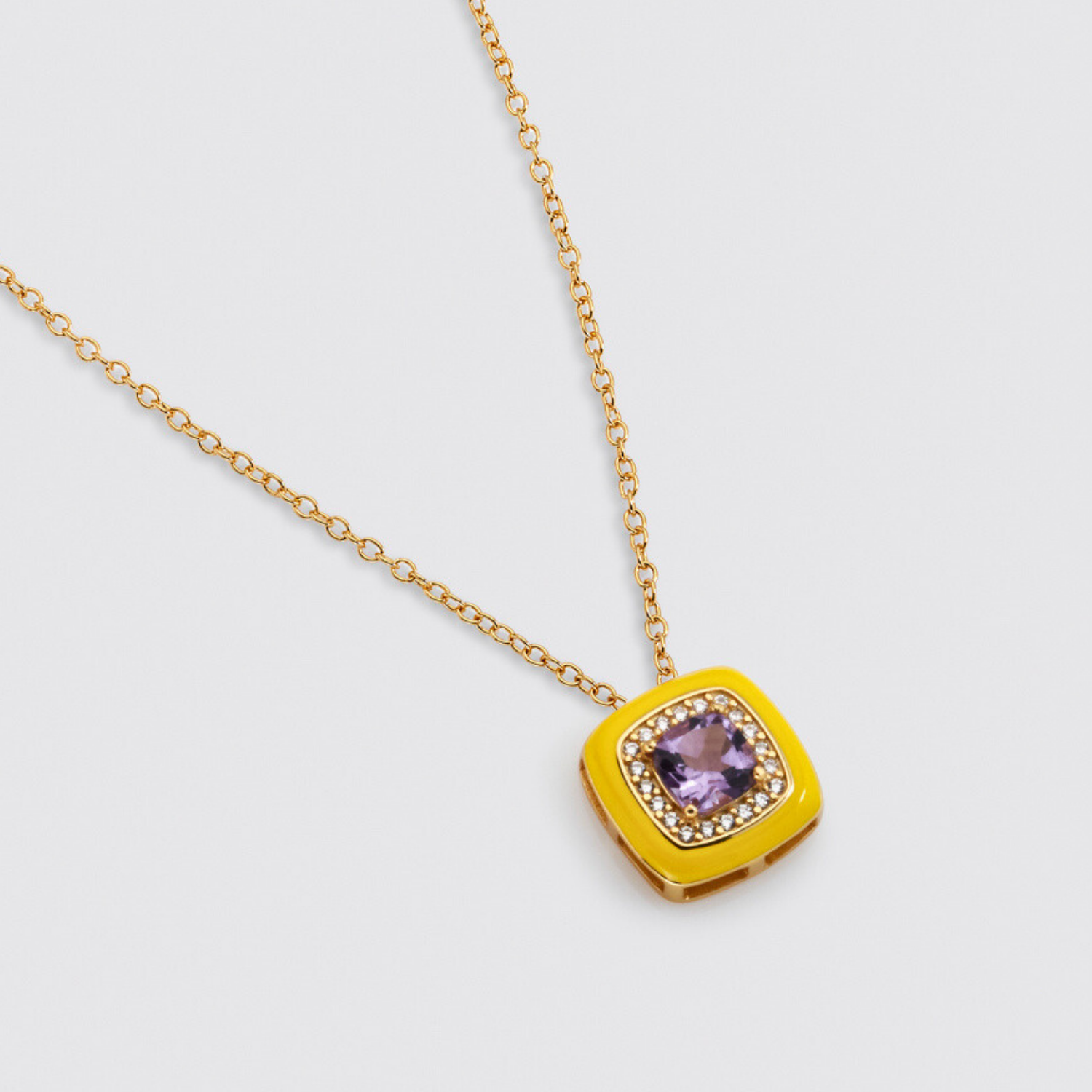
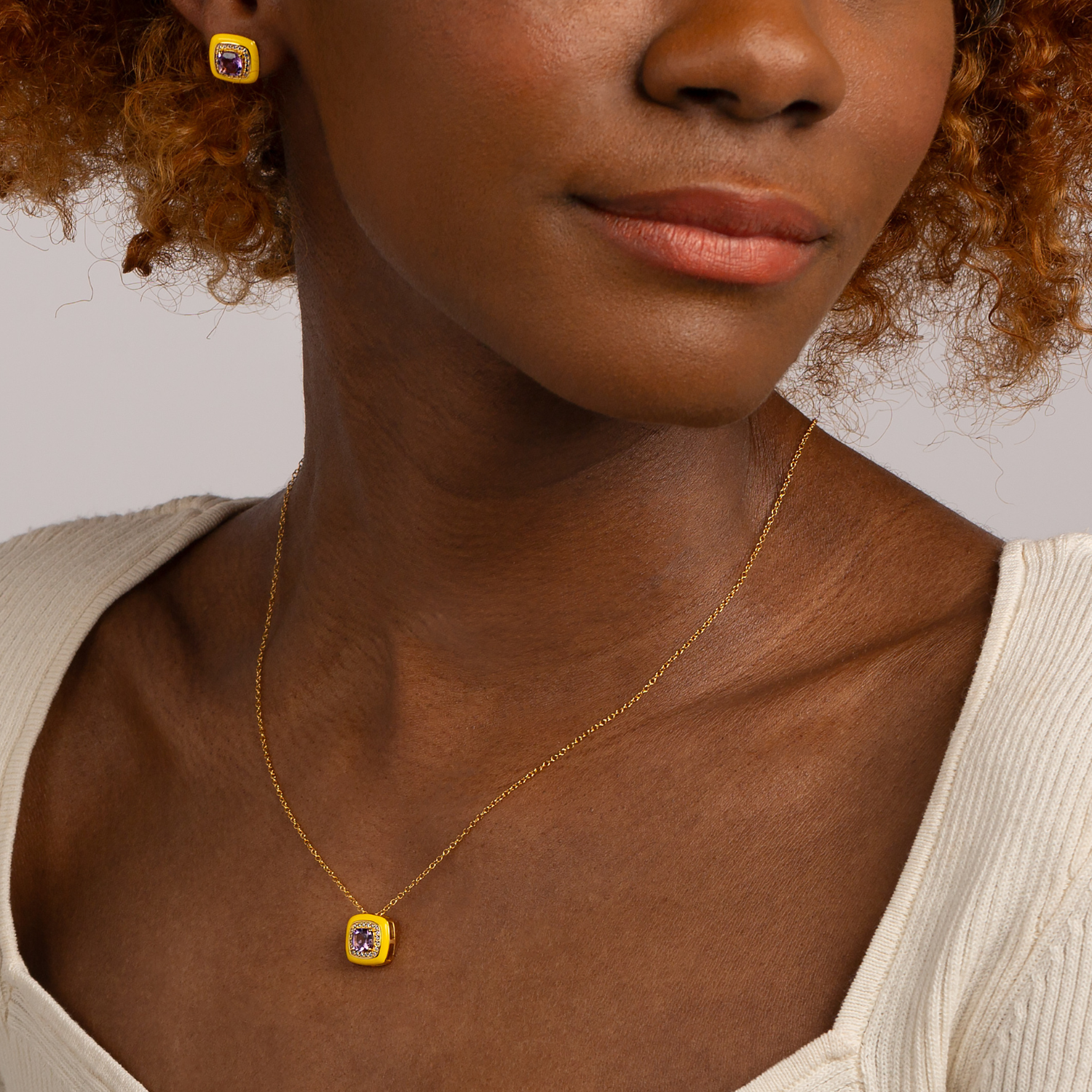
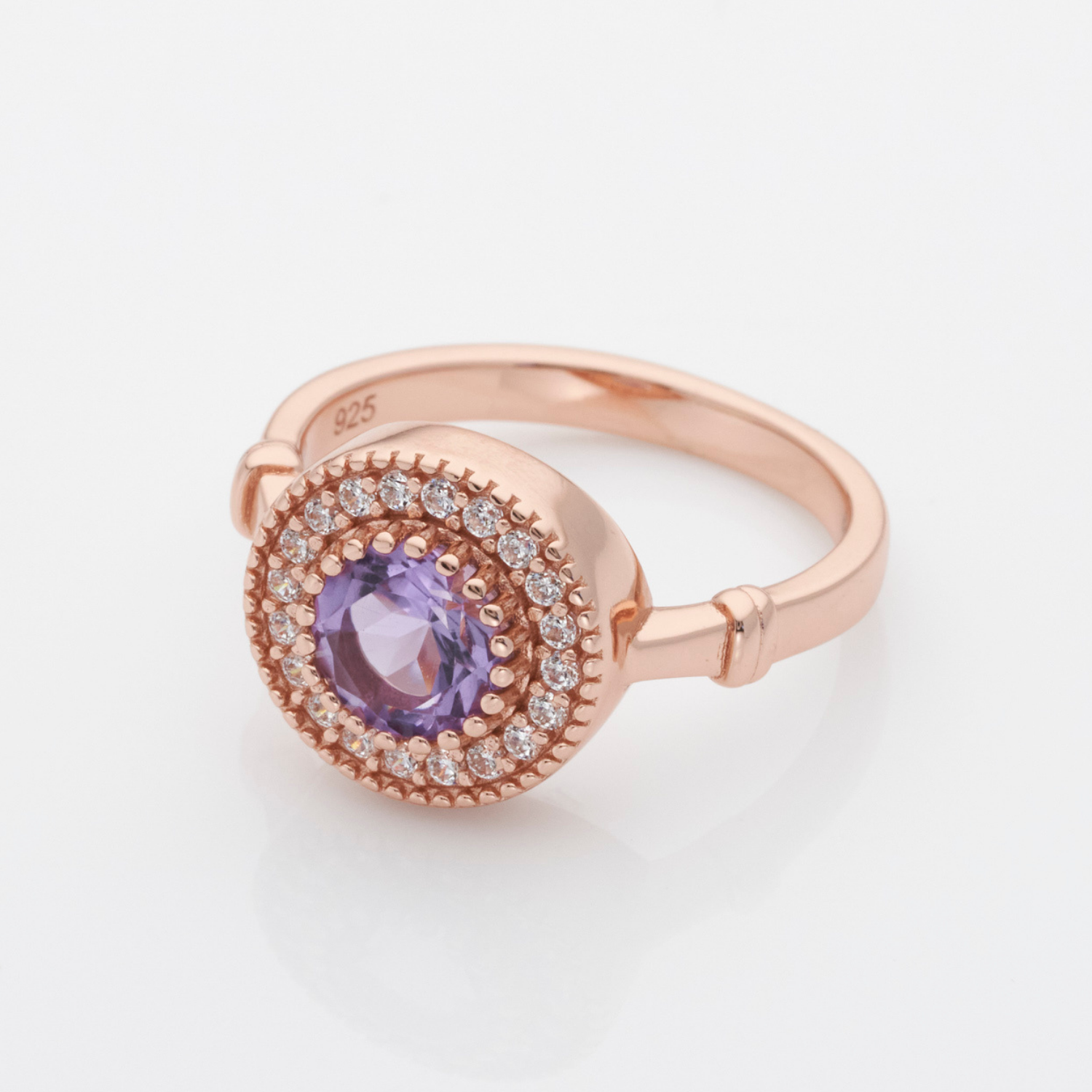
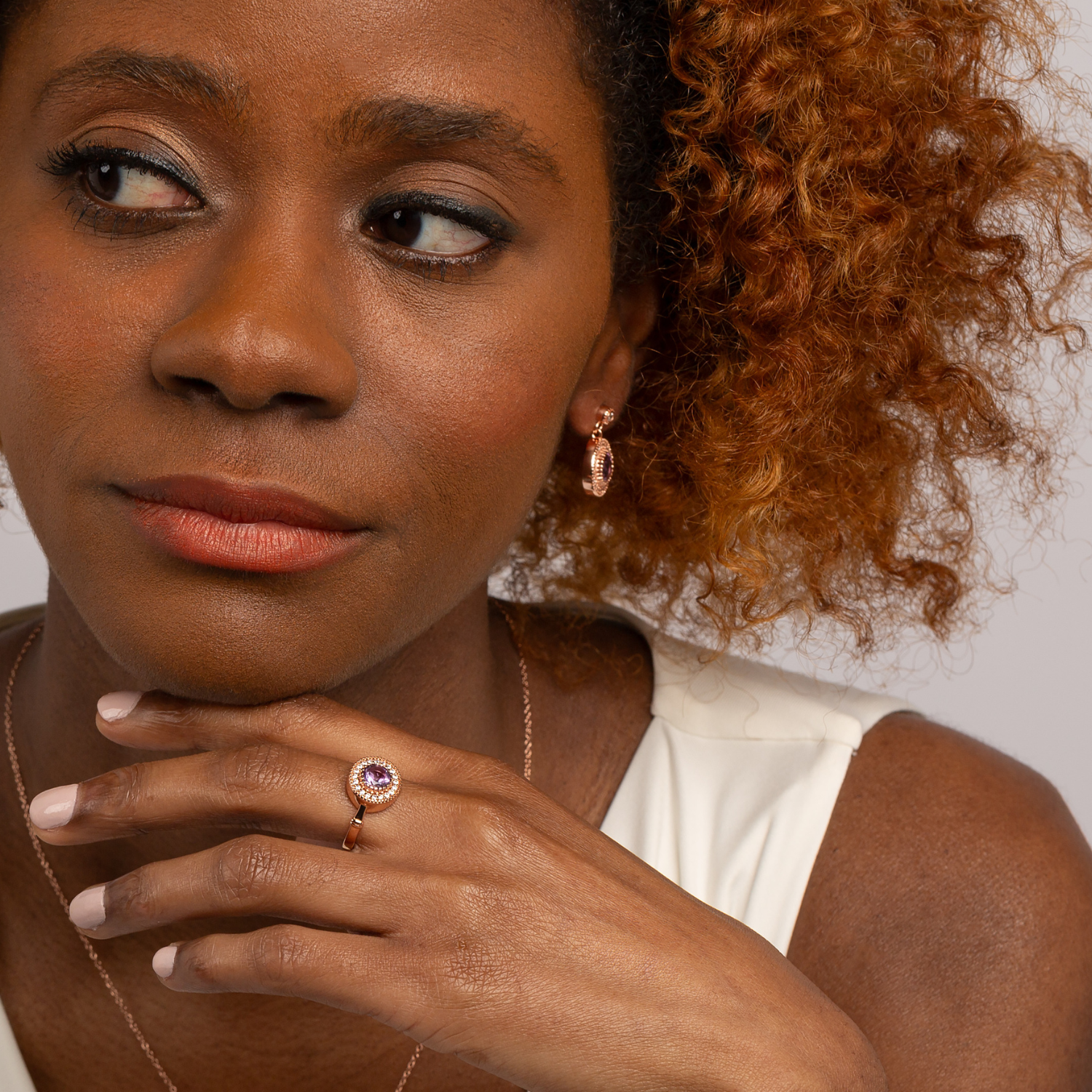
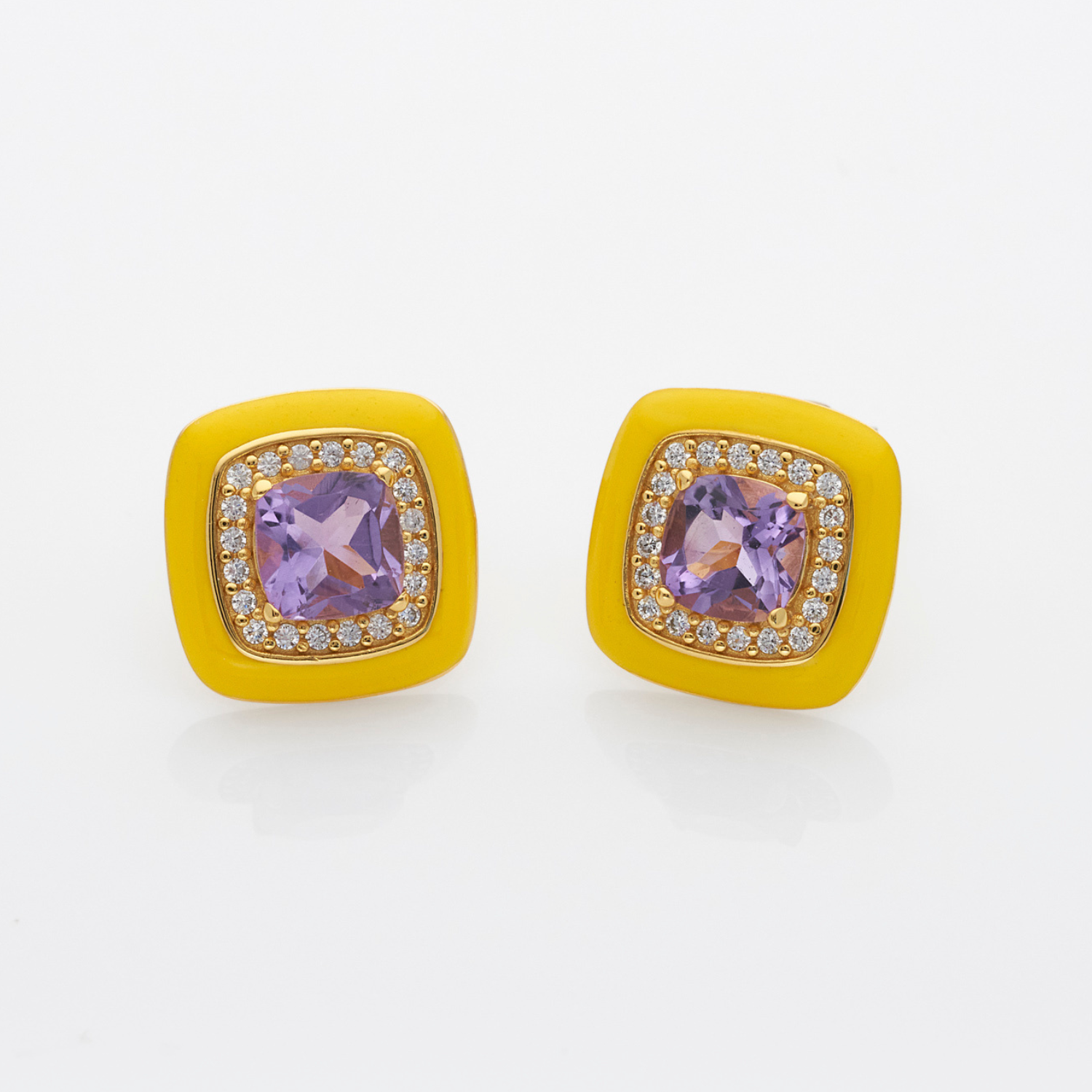
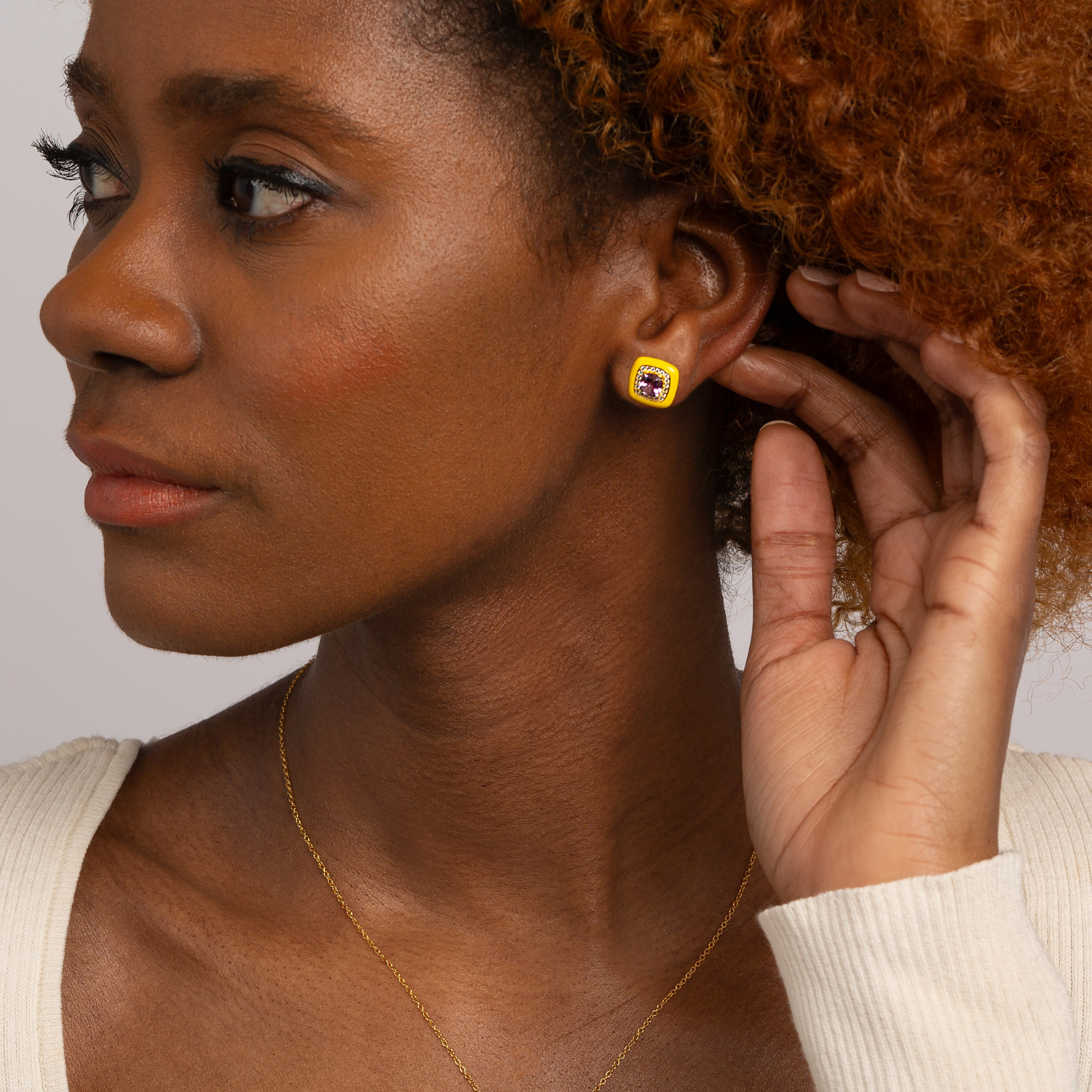
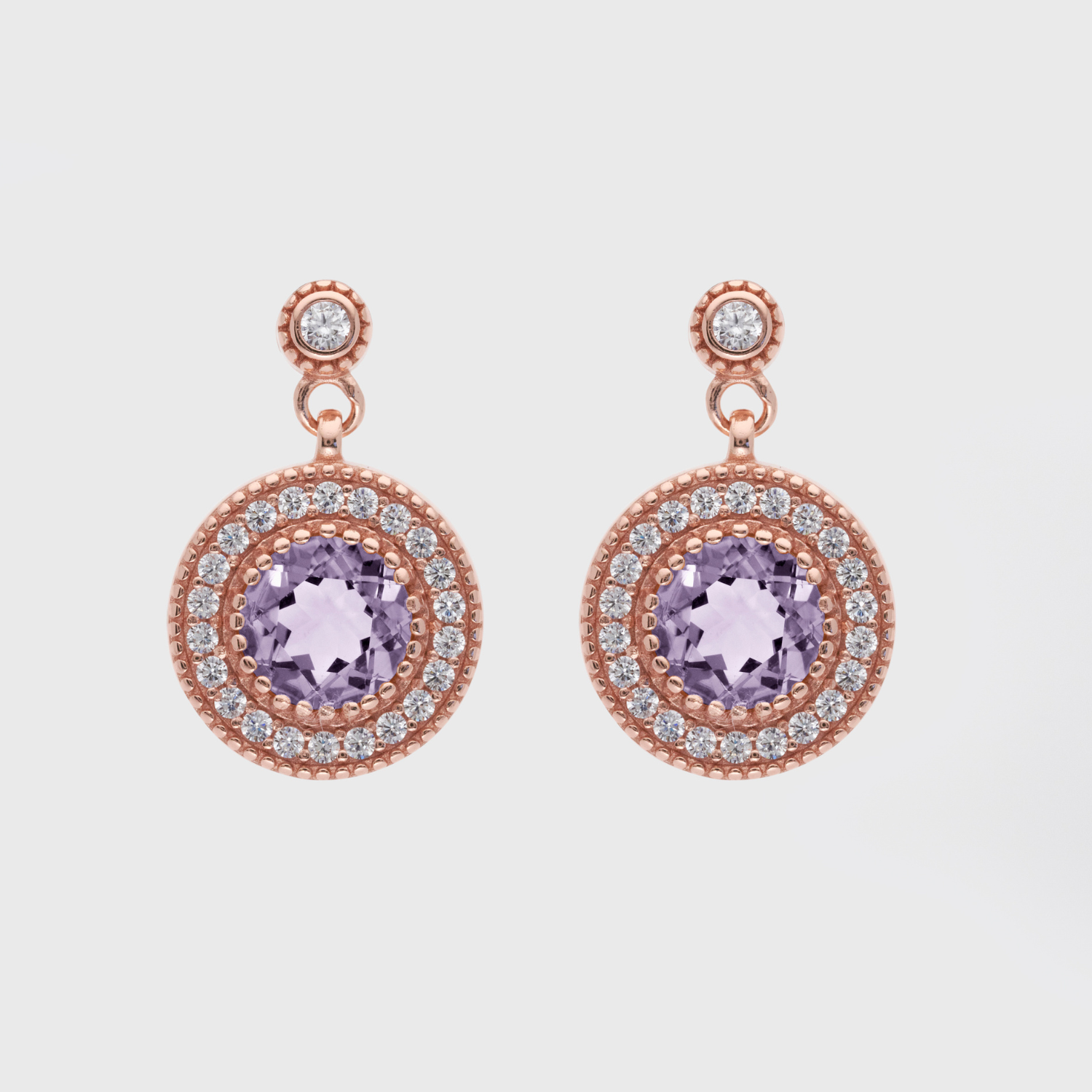
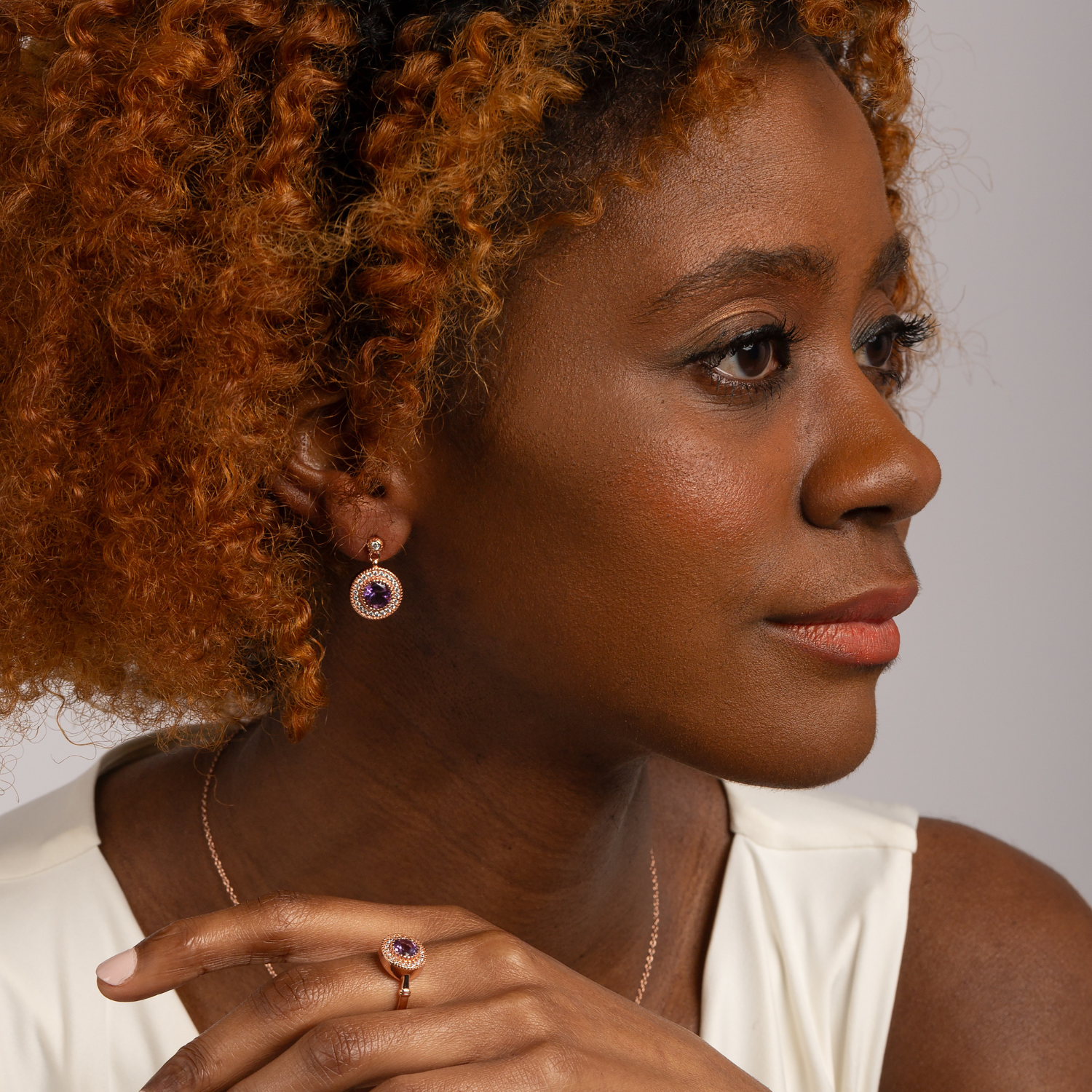
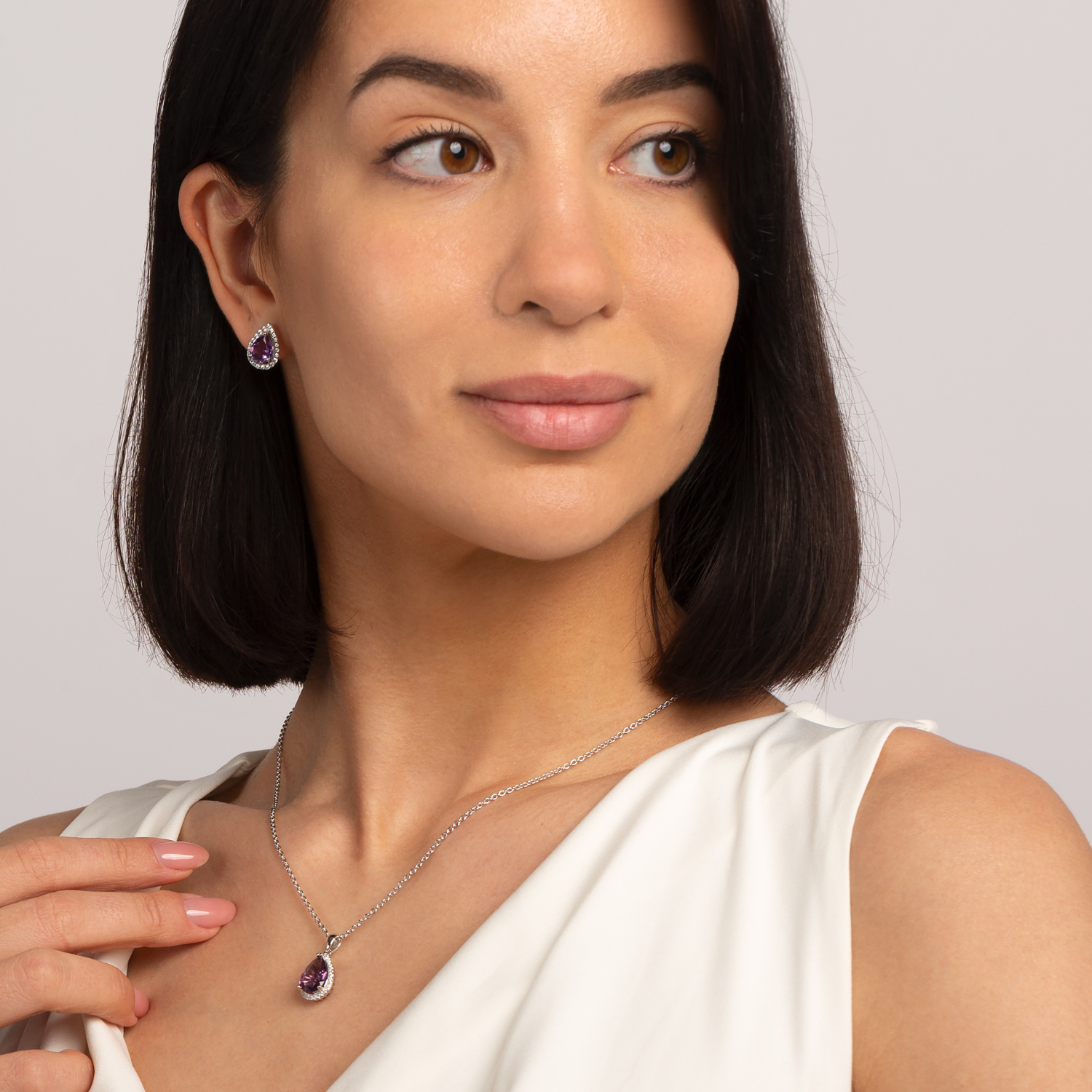
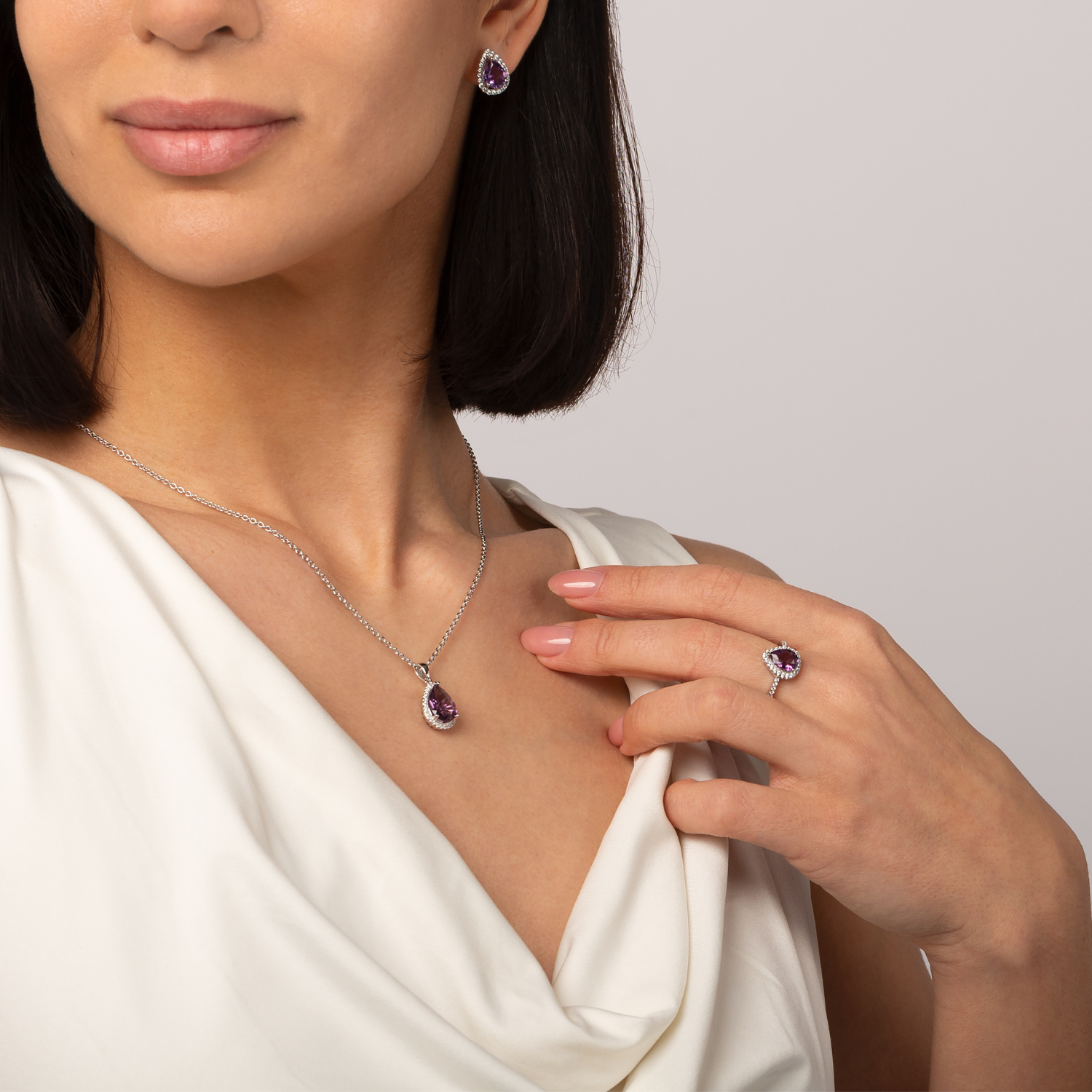
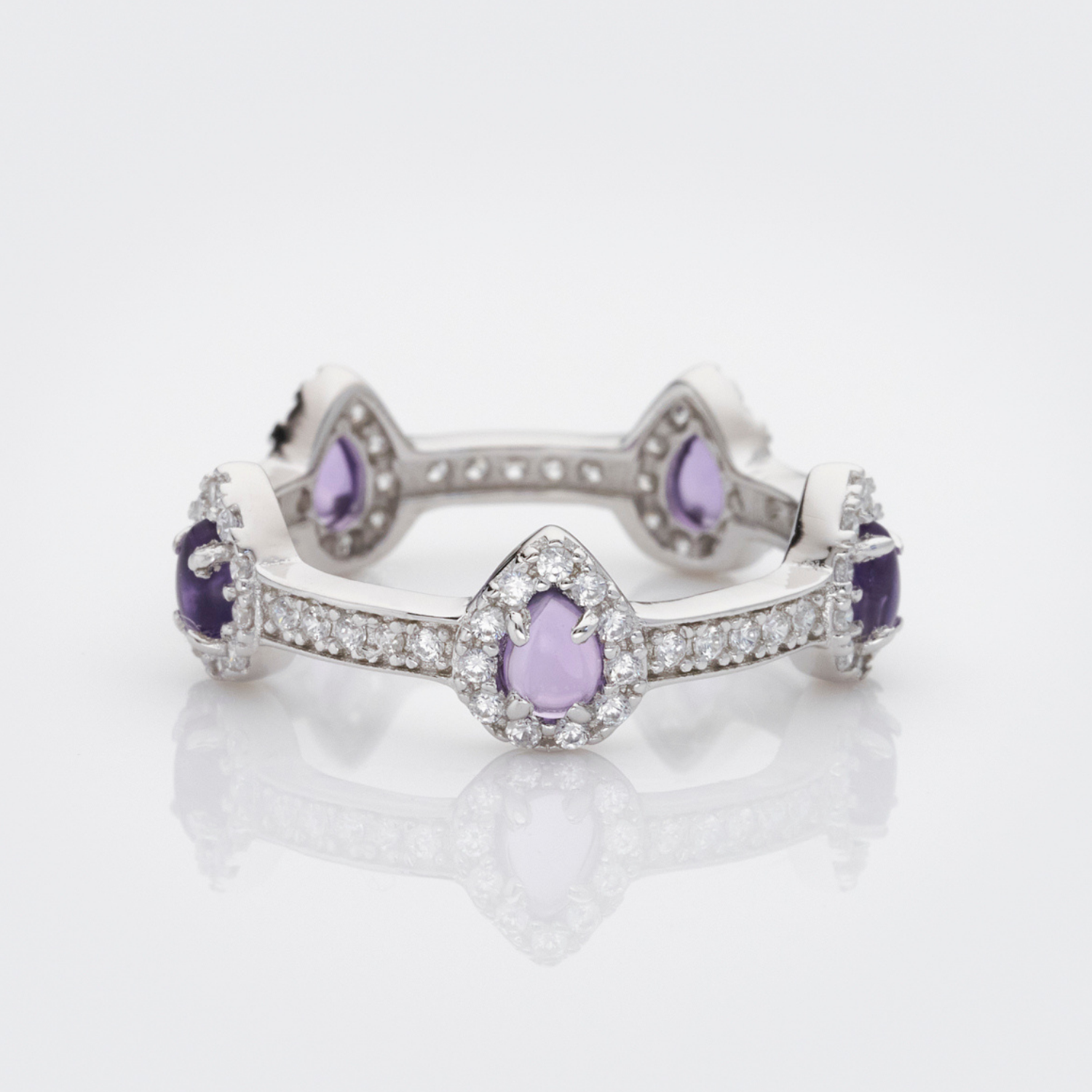
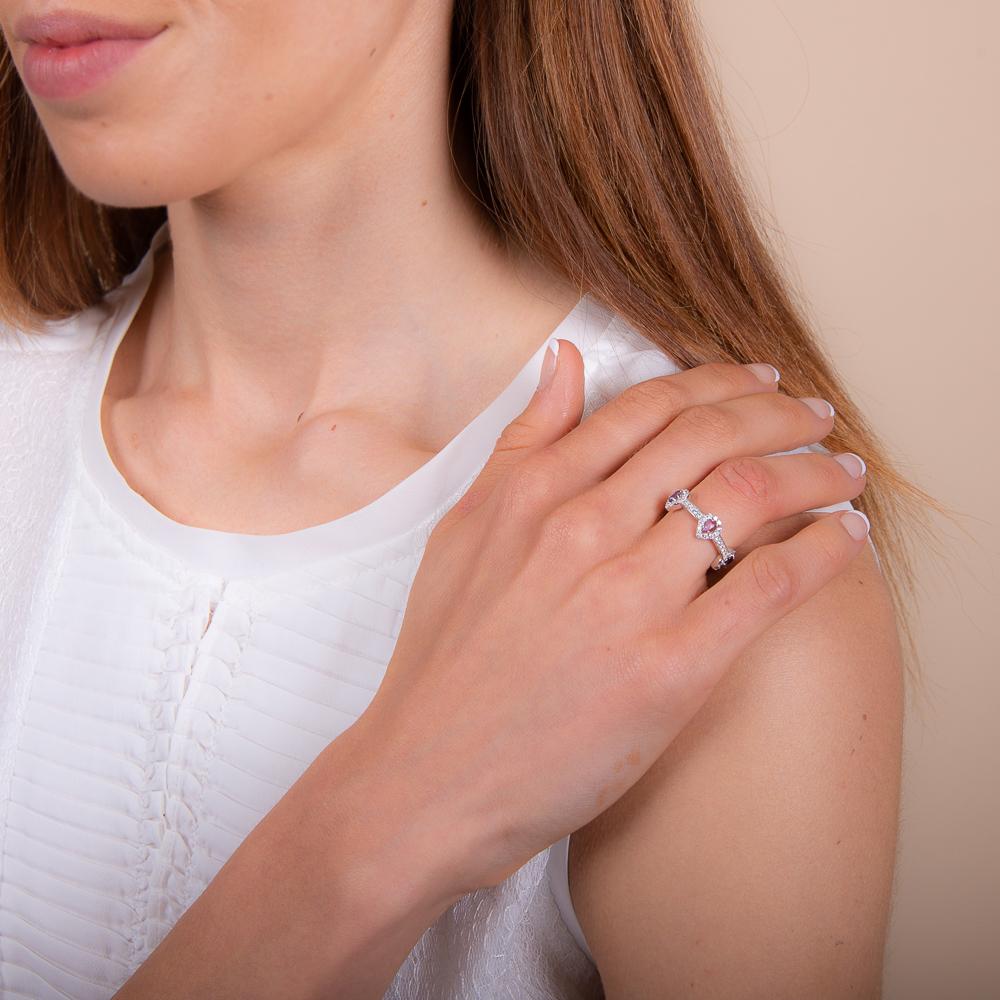
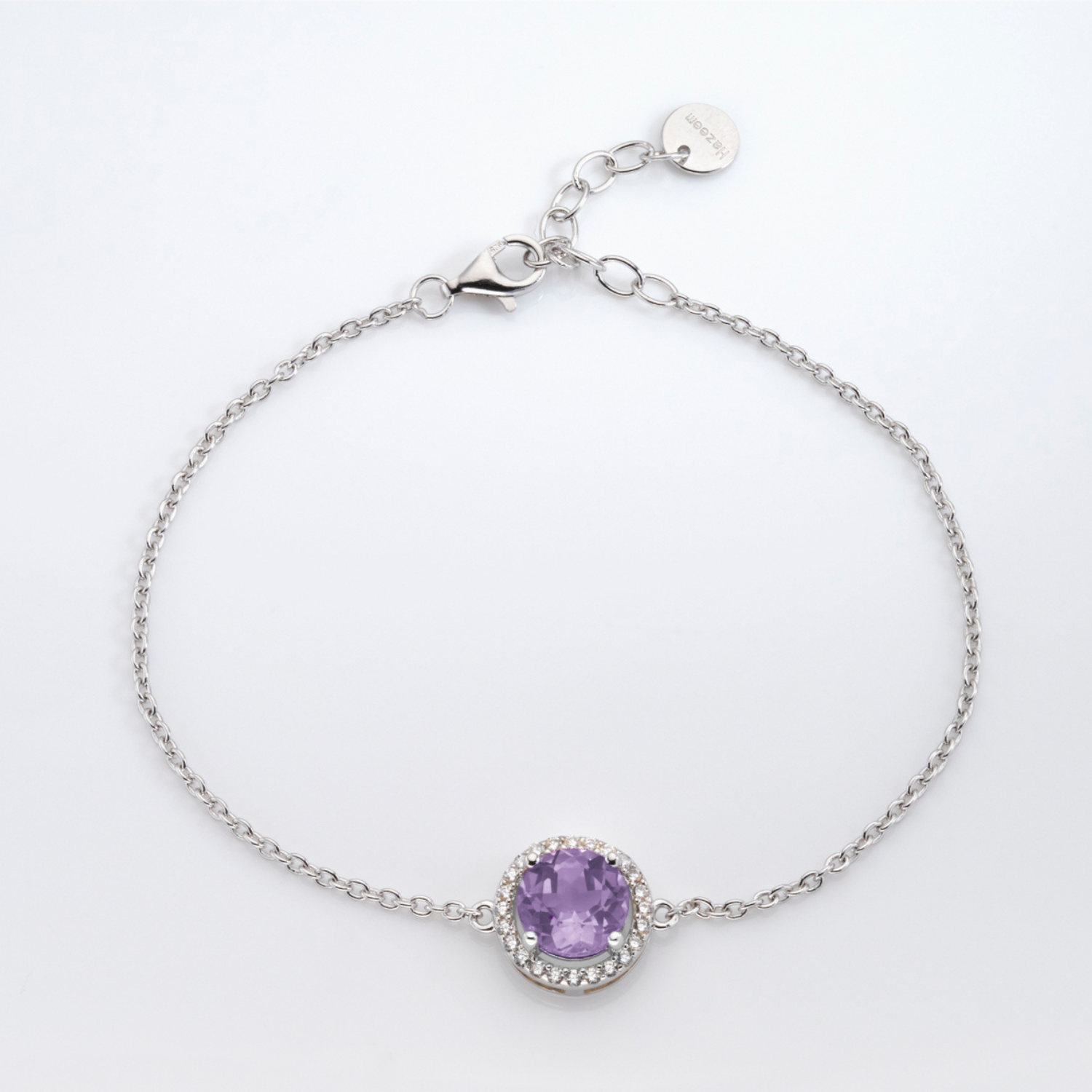
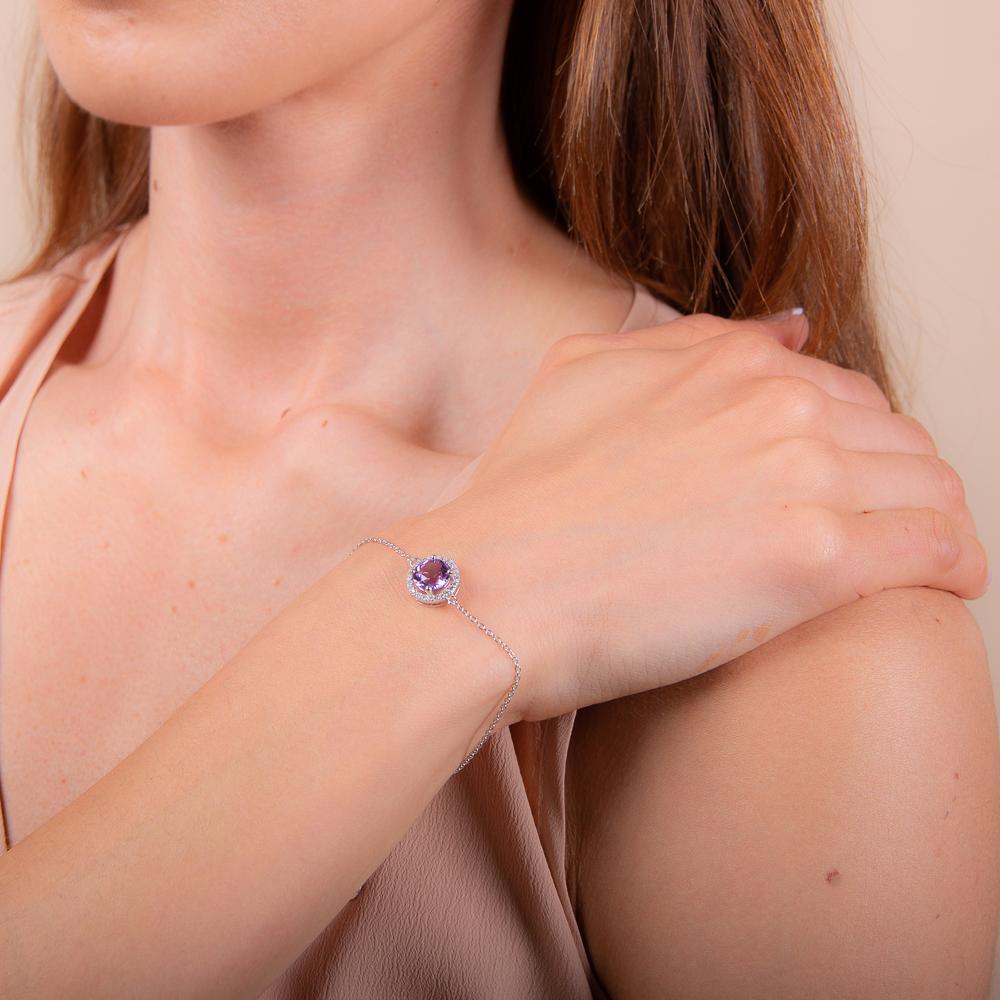
At H.AZEEM London, our February birthstone jewellery collection celebrates the timeless beauty of natural gemstones. From elegant Amethyst rings to refined necklaces, earrings and bracelets, each piece is thoughtfully designed to highlight the richness and individuality of the stone.
Crafted in 925 Sterling Silver and gold finishes, our Amethyst jewellery blends modern design with classic sophistication - making it the perfect gift for February birthdays, 6th wedding anniversaries or meaningful personal moments.
How do you clean and care for Amethyst jewellery?
Proper care ensures your jewellery retains its vibrancy for years to come.
To clean:
- Use warm water with mild soap
- Gently clean with a soft cloth or soft brush
- Carefully remove dirt from behind the stone to allow light to pass through
Avoid:
- Harsh household cleaners
- Ultrasonic or steam cleaners
- Prolonged exposure to direct sunlight
- Extreme heat, which may alter the gemstone’s colour
Store your Amethyst pieces separately in a jewellery box or soft pouch to prevent scratching from harder gemstones.
With thoughtful care, your February birthstone jewellery will maintain its colour, brilliance and elegance over time.
When to gift February birthstone jewellery?
February birthstone jewellery makes a thoughtful and meaningful gift for a variety of occasions — not just birthdays. Because Amethyst symbolises calm, clarity and protection, it carries emotional significance that makes it especially personal.
A piece of Amethyst jewellery is a beautiful way to celebrate:
- February birthdays
- 6th wedding anniversaries (traditionally associated with Amethyst)
- Valentine’s Day
- Mother’s Day
- Graduations and achievements
- New beginnings and personal milestones
Whether chosen as a delicate pendant, refined ring or elegant earrings, Amethyst birthstone jewellery offers both symbolism and style. Its rich purple tones feel luxurious yet wearable, making it suitable for everyday layering or special occasions.
Gifting natural Amethyst jewellery is more than selecting a beautiful gemstone — it’s choosing a piece that carries intention, meaning and lasting sentiment.