OPAL
GEMSTONE
Believed to bring luck and clarity to the wearer, Opals are also said to install a sense of calmness and tranquillity.
Recently viewed
Introduction to Opal
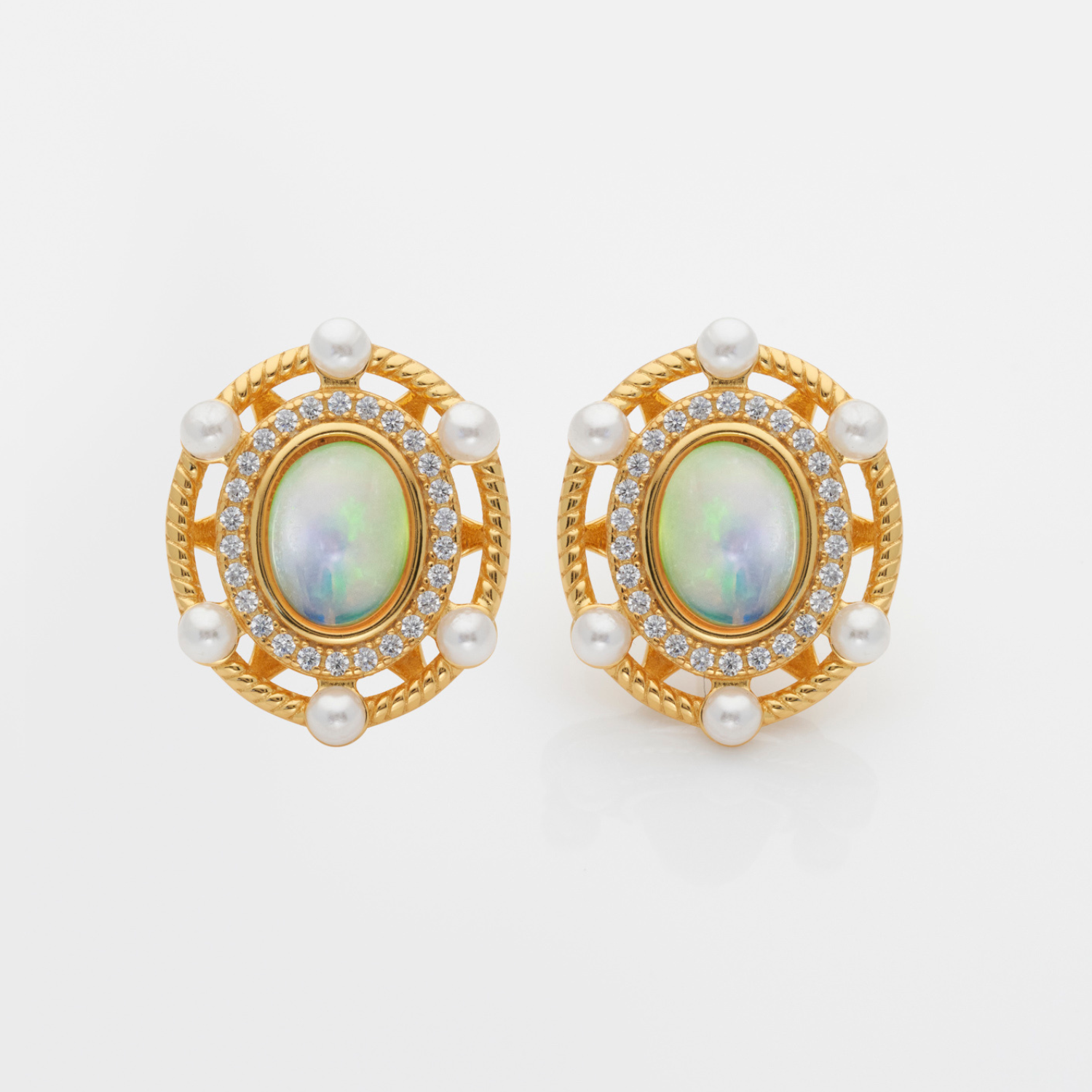
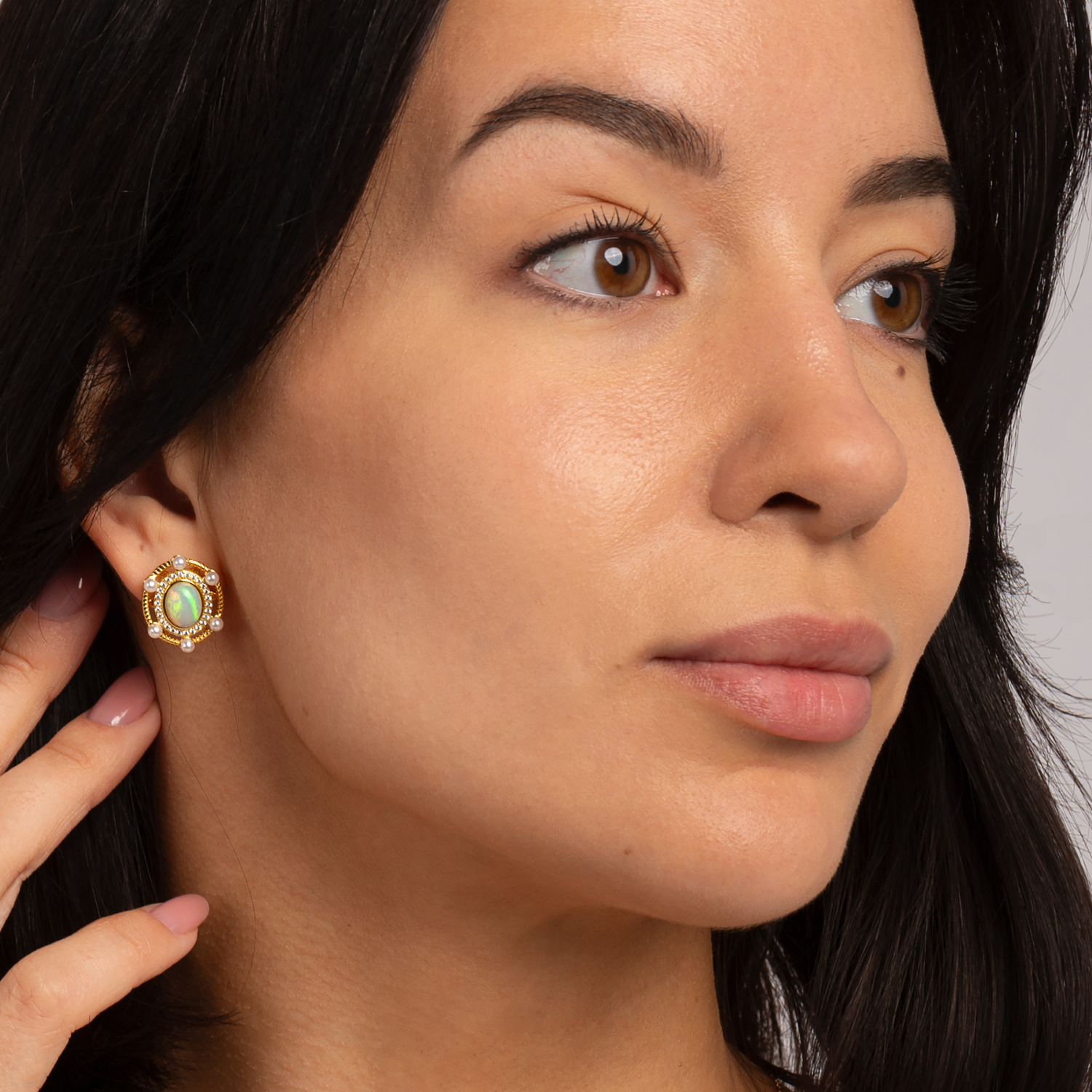
Opals are well known for their captivating play-of-colour, a mesmerising display of shifting hues reminiscent of rainbows. Our Opal jewellery pieces including gold earrings and gold necklaces, are designed with multi-colour tone Opal and freshwater Pearls, to create a contemporary style that fits for all occasions. It is believed to have its origins in India, where it was known as "upala" in Sanskrit, meaning "precious stone" and evolved into "opalus" in ancient Rome, marking the introduction of Opals to the Western world.
Where does Opal come from?
Opal has been credited with supernatural origins and powers by many cultures. Arabic legends suggest it descends from the heavens in flashes of lightning, while ancient Greeks believed Opals were bestowed with poetic names such as pandora, Light of the World, and Empress by admirers; it is believed to offer protection against disease. Europeans have held Opal in high regard as a symbol of hope, purity, and truth. Throughout history, Opal has always been designed with jewellery like our contemporary necklace and stud earrings to add elegance and sophistication to any ensemble. Wearing Opal jewellery has always been associated with royalty and luck. Our gorgeous statement necklace perfectly reflects the multi-tonal colours of Opals.
What are the gemstone properties and benefits of Opal?
The Opal was once considered a stone that could bring much luck and purity during the Middle Ages. It is said to harbour properties of serenity and creativity. The mesmerising gold jewellery with Opal gemstone is believed to bring a sense of calmness and tranquillity to its wearer, promoting inner peace and harmony. Additionally, Opal jewellery, our statement earrings are believed to stimulate creativity and imagination, inspiring artistic expression and innovative thinking. Its subtle yet enchanting energies are said to awaken the senses and encourage exploration of one's inner depths, making Opal a cherished companion for those seeking both inner peace and artistic inspiration.
Is Opal a birthstone?
Opal is considered as the October birthstone, an alternative to Tourmaline for people to choose from. The October birthstone symbolises the rich diversity of this autumnal month. As a birthstone, the Gold jewellery with Opal gemstone serves as a timeless reminder of the beauty and resilience found within the changing landscapes of life, guiding its wearers towards balance and renewal.
Opal, known as the 14th wedding anniversary gemstone, symbolises the enduring bond between partners as they journey through fourteen years of marriage. Like the multi-tonal colours of Oapl, it embodies the complexities and beauty of a maturing relationship, where each passing year brings new layers of understanding and appreciation. As couples celebrate their 14th anniversary, the stunning gold necklace serves as a timeless tribute to the passion and commitment that continue to deepen with time.

Frequently Asked Questions About Opal
Opal can display play-of-colour, while Moonstone is known for its glow called adularescence. Similar colour does not mean two gemstones are the same, and reliable identification may require gemological testing rather than visual comparison alone.
Opal can be used in rings, but the right setting and care are important. Rings receive more knocks and abrasion than necklaces or earrings, so consider the stone's durability, how exposed it is and whether the ring will be worn daily. Remove it for strenuous or manual activities.
Yes. Opal jewellery can be chosen for its distinctive appearance — white, dark or coloured body tones with possible flashes of spectral colour — its association with luck, creativity and inspiration. Earrings and necklaces avoid sizing concerns, while a ring can feel more personal when the recipient's size is known.
Opal can work with both gold and silver. Gold normally creates a warmer, richer effect, while sterling silver gives a cooler or more contemporary contrast. The best choice depends on the stone's individual colour, the design and the metals you prefer.
Check whether the seller clearly identifies the stone as natural, laboratory-created, treated or imitation and states the jewellery metal. Photographs and inclusions alone cannot prove authenticity. For a high-value or uncertain piece, professional gemological testing provides the most reliable identification.
Occasional brief contact with clean water may not immediately damage every Opal piece, but it should not be worn while showering, swimming or bathing. Water, chlorine, salt, soap and repeated moisture can affect the gemstone, setting or plated finish, so remove the jewellery first.
Wipe Opal jewellery gently with a clean, soft cloth after wear. Follow the care instructions for the specific product before using water or soap, and avoid bleach, acids, abrasive cleaners and unapproved ultrasonic or steam cleaning. Dry the piece fully before storing it.
Opal is more delicate than many gemstones and best protected from knocks, dryness, heat and sudden temperature changes. Rings and bracelets experience more contact than earrings and necklaces, so suitability also depends on the setting and the wearer's routine. Remove gemstone jewellery before exercise, cleaning, swimming or manual work.
There is no single UK price for Opal. Loose-stone value depends on quality, size, cut, treatment, origin where reliably established, and market demand; finished jewellery also reflects its metal and craftsmanship. For a formal valuation of an existing piece, consult an independent qualified jewellery valuer or gemologist.
Opal jewellery is available at different price points. The cost depends on the stone's variety, colour, clarity, size, cut, rarity and treatment, together with the metal, craftsmanship and complexity of the finished design. The gemstone name alone is not enough to judge value.
Opal jewellery features a hydrated form of silica known for its distinctive play-of-colour set into pieces such as rings, necklaces, earrings and bracelets. It is recognised for white, dark or coloured body tones with possible flashes of spectral colour. H.AZEEM London specialises in natural gemstone jewellery crafted primarily in 925 sterling silver, with selected gold and rose-gold finishes.
Yes, Opal occurs naturally. Natural does not always mean untreated, however, so buyers should check the product description for the gemstone identity, treatment information where relevant, and the jewellery metal. Not every Opal shows play-of-colour, and doublets or triplets require different care from solid Opal.
Opal is recognised for white, dark or coloured body tones with flashes of spectral colour. Natural stones can vary in tone, transparency, inclusions and pattern, so an individual piece may not look identical to another or to a sample photograph.
Opal has traditionally been associated with luck, creativity and inspiration. These meanings can make the jewellery personally significant, but they are cultural or spiritual associations rather than scientifically proven medical effects.