How to Buy Natural Gemstone Jewellery Online: A UK Guide
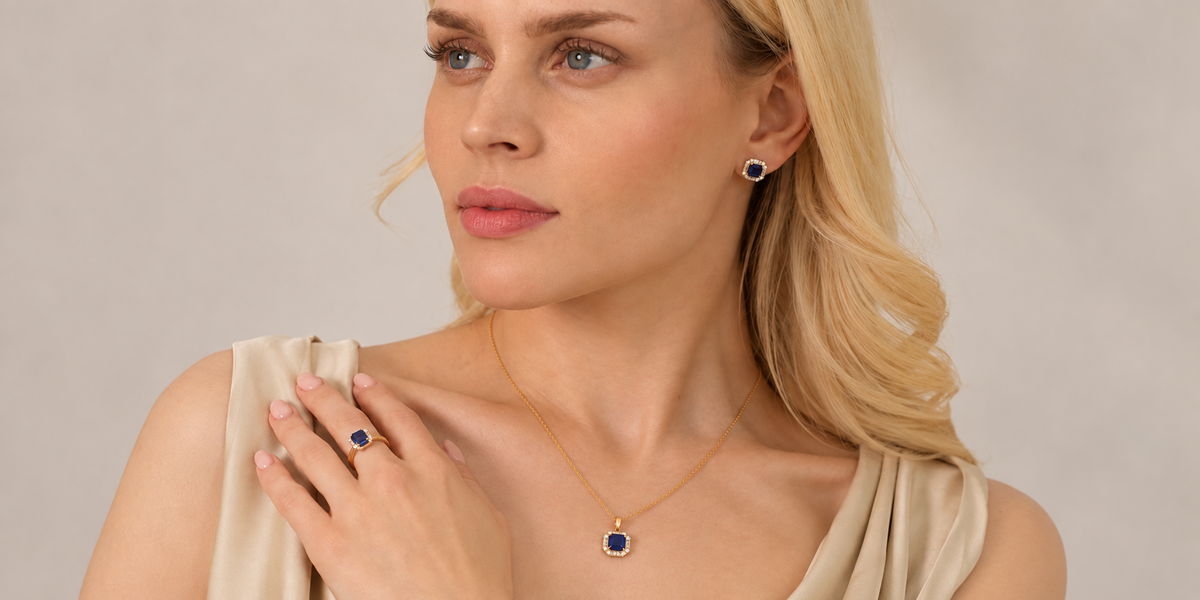
Buying natural gemstone jewellery online starts with the stone's identity, the metal, the setting and the details behind any certificate. Once those are clear, you can enjoy the part that brought you here: finding a piece you cannot stop looking at.
Perhaps it is a flash of blue in a pendant or a deep red ring you can already picture with your favourite knit. Jewellery often begins with that small moment of recognition. You like it. It feels like you. Now you want to know whether the description lives up to the photograph.
A little knowledge makes that decision easier. Here is what to look for before a beautiful image becomes a piece in your jewellery box.
What is the difference between natural, lab-created and imitation gemstones?
A natural gemstone forms through natural processes. A lab-created gemstone grows in controlled conditions and has essentially the same composition and crystal structure as its natural counterpart. An imitation, or simulant, resembles another gem but differs in material properties.
These descriptions tell you different things about origin and identity. They do not, by themselves, tell you whether a design is attractive or well made. The important point is that the product description lets you make an informed choice.
Natural does not automatically mean untreated. Some natural gems undergo treatments to alter their appearance. If untreated status matters to you, ask specifically rather than assuming it from the word natural.
What should the product description tell you?
Look for a named gemstone, rather than only a colour or a phrase such as crystal stone. Check whether the seller identifies it as natural, laboratory-created or an imitation, and ask about treatments when these details affect your decision.
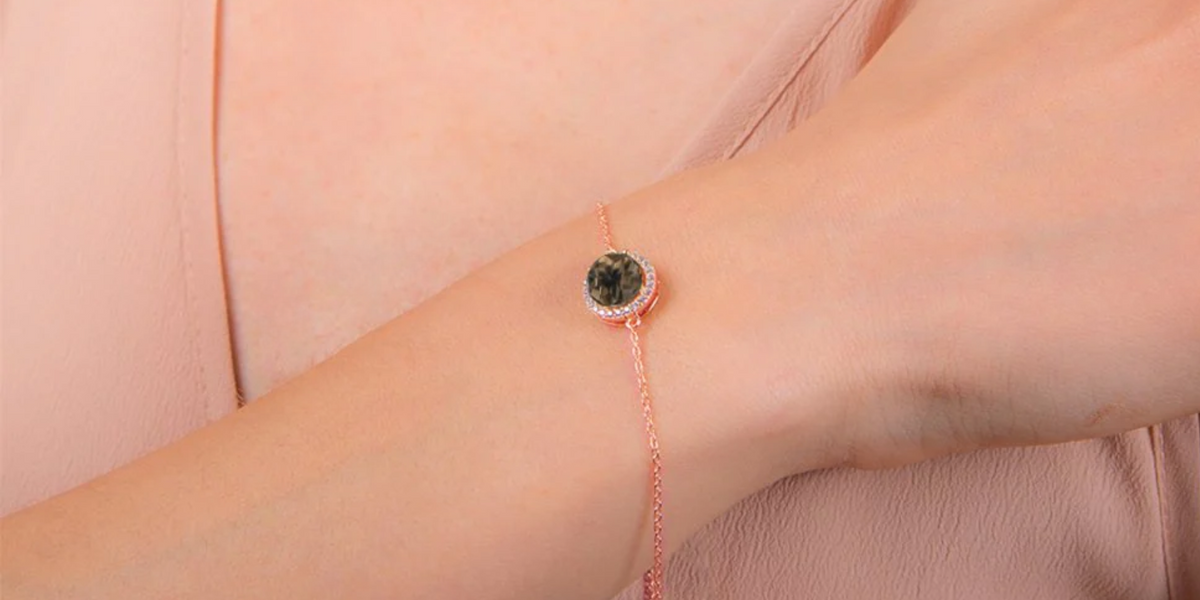
Next, check the base metal and finish. Gold-plated sterling silver has a silver foundation with gold on the surface; it is different from solid gold. Then bring the measurements to life. A pendant photographed close up can look rather grand on screen and much more delicate when it arrives. Compare its dimensions and chain length with a necklace you already enjoy wearing.
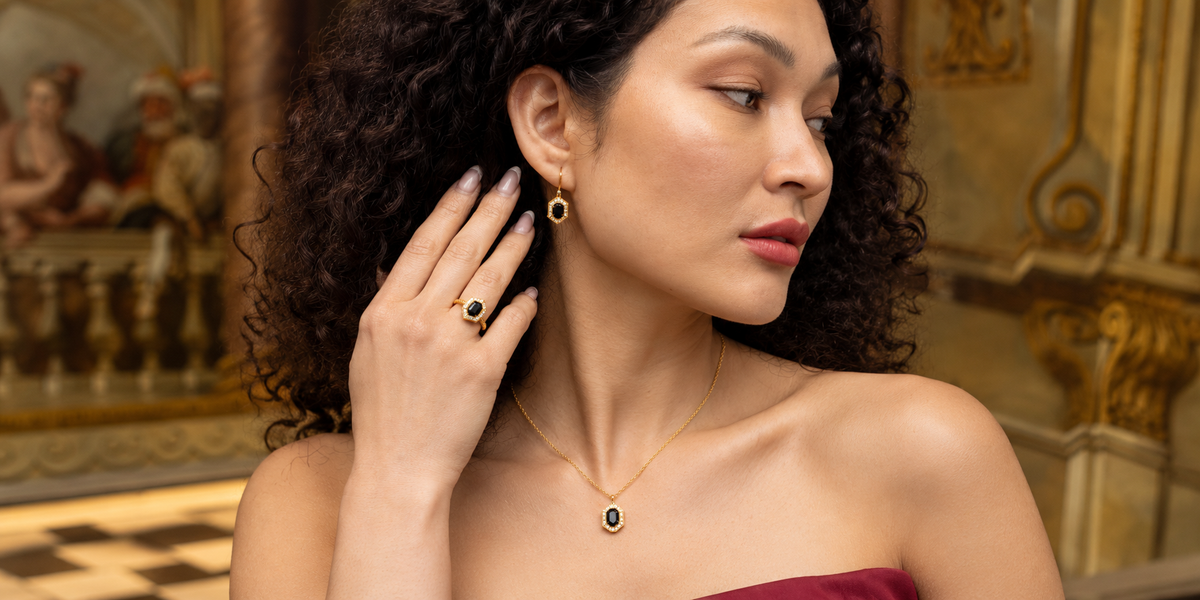
For earrings, think about their drop, fastening and weight where supplied. For rings, check the available sizes and how high the stone sits above the finger. These small details often decide whether a piece becomes a favourite.
Can you tell whether a gemstone is natural from a photograph?
Not reliably. Visible inclusions or variations can be interesting features, but they do not establish origin. Equally, a clear, evenly coloured stone is not automatically synthetic.
Ask for written material information. For a significant purchase, an independent gemmological report may be appropriate. A retailer's certificate and a laboratory report are different documents: read what each actually verifies.
How do you assess the setting and finish?
Use close-up photographs to look at the design from more than one angle. Notice whether the setting protects the stone's edges, whether the claws appear consistent and whether the chain or fastening suits your routine.
Imagine the piece in use, too. Will those earrings sit comfortably through a long dinner? Will the ring catch on your favourite jumper? Photographs cannot answer everything, so ask about care, repairs and whom to contact if something becomes loose. Check the returns information before ordering, particularly for a ring.
What should you know about certificates and warranties?
A certificate is useful when its scope is clear. H.AZEEM London's Quality Promise describes an included Certificate of Authenticity and a 12-month warranty. Read the current warranty information for registration and ask about coverage if you need clarification.
H.AZEEM specialises in gemstone jewellery, but the individual specification remains the deciding reference. Some product listings explicitly identify synthetic sapphire. Always choose according to the stone and materials stated for the exact piece.
A final checklist before you buy
- Confirm the gemstone identity and any origin or treatment information you need.
- Read the base metal and finish separately.
- Compare the dimensions with jewellery you already wear.
- Check close-up images, sizing, returns and aftercare.
- Understand what any certificate or warranty actually covers.
Once the details make sense, go back to your first impression. Does the colour still catch your eye? Can you picture wearing it with something already in your wardrobe? That is the enjoyable part of choosing jewellery, and knowing the materials leaves you free to enjoy it.
Explore H.AZEEM's gemstone jewellery, then use the specification on each piece to find the right fit.
Frequently asked questions
Does natural mean untreated?
No. Natural describes how a gemstone formed. Treatment describes processes that may have altered its appearance afterwards.
Is lab-created the same as imitation?
No. A lab-created gem has essentially the same composition and structure as its natural counterpart. A simulant imitates its appearance using a different material.
Does a certificate prove a gemstone's mine of origin?
Only if it explicitly establishes that information. A seller's certificate should not be treated as an independent origin report.